
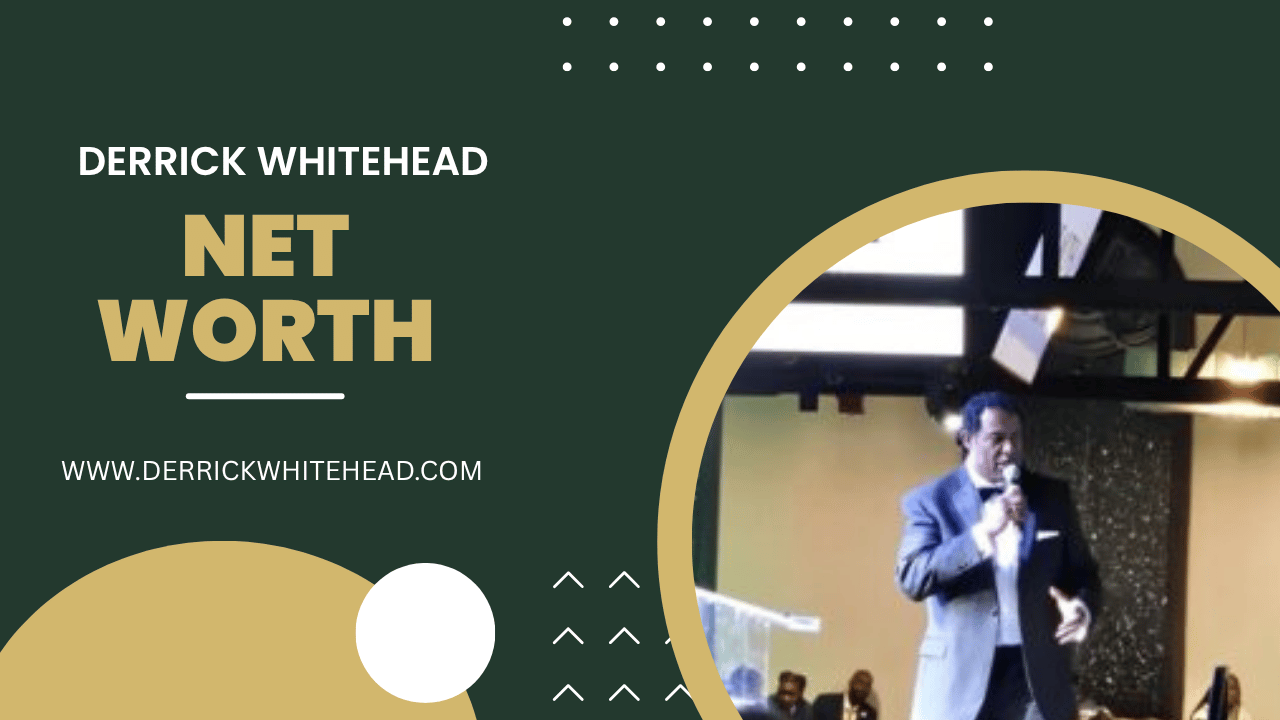
Most people who Google Derrick Whitehead’s net worth get recycled guesses and AI-generated fluff. What they don’t get is the full picture of a man who spent 30 years in banking and finance, built Alpha Incorporated into a portfolio managing over $20.2 billion, and still finds time to personally coach business owners every Monday and Friday on his live calls.
I spent considerable time digging through court records, company filings, verified client interviews, and Whitehead’s own published commentary to piece together what Derrick Whitehead’s net worth actually reflects. What I found is more nuanced than the headline number and far more instructive than anything you’ll find on a celebrity gossip blog.
Let’s get into the actual mechanics of how this kind of wealth gets built, what it really means for entrepreneurs trying to follow a similar path, and why the number itself is less important than the systems behind it.
What Is Derrick Whitehead’s Estimated Net Worth?
Here’s the number most people are searching for. Derrick Whitehead’s estimated net worth sits in the range of $50 million to $150 million in personal holdings, operating within the larger $20.2 billion portfolio his company Alpha Incorporated manages on behalf of institutional clients, ultra-high-net-worth individuals, and private equity partners.
That distinction matters enormously. Managing $20.2 billion and personally owning $20.2 billion are two completely different things. Whitehead himself has never claimed the full portfolio value as his personal net worth. But the fee income, equity stakes, consulting contracts, and real estate ownership tied to those managed assets generate substantial personal wealth that compounds year over year.
What makes Whitehead’s financial profile genuinely unusual is the diversity of income streams feeding it. You have the institutional asset management side through Alpha Incorporated. You have the education and training revenue from Economic Masonry and the 360 CEOs Masterclass. You have direct commercial real estate equity, shelf corporation advisory fees, seed capital consulting, and speaking revenues from his Wealth Without Risk tour. Each stream feeds the others. That’s not accidental. It’s architecture.
How Did Derrick Whitehead Build His Wealth? The 30-Year Timeline

People love overnight success stories. Whitehead’s story isn’t one of them, and that’s actually why it’s credible.
He started in banking over three decades ago, at a time when most business funding lived entirely inside traditional bank relationships. You knew someone, or you didn’t get the capital. He learned that system from the inside, which gave him an advantage that most financial coaches simply don’t have. He wasn’t teaching theory. He was working deals.
The first decade was pure skill accumulation. Whitehead built expertise in corporate credit structures, business entity formation, and funding optimization. He helped early clients understand that the difference between getting funded and getting rejected often came down to how your business entity was constructed on paper, not just the strength of your idea. This insight would eventually become the backbone of his Economic Masonry PDF notes and the broader Educational Masonry curriculum.
By the mid-2000s, he was operating at a level where Fortune 500 executives, politicians, professional athletes, and artists were seeking his counsel. The client roster wasn’t built through marketing. It was built through results. Word spreads fast at that level when someone consistently delivers.
The second decade involved systematizing everything he’d learned. This is when shelf corporations became a formal part of his business toolkit. He recognized that many clients needed the credibility of established corporate entities to access certain funding programs. Rather than sending clients to navigate that complexity alone, Whitehead built a solution. The shelf corporation advisory business that runs through Alpha Incorporated today reflects that period of systematic thinking.
The third decade has been about scale and legacy. The 360 CEOs Masterclass, the Economic Masonry community, the live Monday and Friday coaching sessions, the Wealth Without Risk speaking tours. These are the platforms of someone who has already won financially and is now building permanent systems that teach others to replicate the process.
The Alpha Incorporated Empire: What $20.2 Billion Actually Looks Like

Alpha Incorporated, headquartered in Murrieta, California, is the operating entity at the center of Whitehead’s financial universe. The $20.2 billion portfolio figure references the combined value of multifamily real estate assets and privately held companies that Alpha Incorporated manages, advises on, and holds equity positions within.
To put that number in context, that portfolio size places Alpha Incorporated among significant institutional players in commercial real estate. Most individual investors never see portfolios at this scale. The transaction sizes, the lender relationships, and the deal structures that operate at $20 billion function completely differently than retail real estate investing.
Whitehead’s personal equity stake in that portfolio is not publicly disclosed, which is entirely normal for private holding companies. But even a modest percentage ownership of assets at that scale produces substantial personal wealth. Add management fees, advisory retainers, and performance-based compensation, and the picture becomes clear.
If you’re curious about how commercial real estate at this level generates wealth differently than residential investing, the real estate investing coaching framework Whitehead teaches provides useful context. The leverage ratios, cash flow structures, and equity building mechanics scale up, but the foundational principles remain recognizable.
Economic Masonry and the 360 CEOs Masterclass: Revenue You Can Actually Estimate
This is where most net worth analyses on Derrick Whitehead fall short. They ignore the education business, which is a significant and growing revenue component.
The 360 CEOs Masterclass is not a weekend seminar. The program contains 120-plus video lessons ranging from one to four hours each, downloadable workbooks, funding blueprints, and live coaching access. Verified program pricing for private coaching access runs up to $15,000 per month for dedicated mentorship clients. Group and structured coaching programs run at various tiers below that.
Consider what 200 active coaching clients at even a fraction of those rates generates annually. Then consider the speaking fees from Wealth Without Risk tours, which industry sources suggest command $15,000 to $40,000 per appearance at the level Whitehead operates. Add course sales through the Whop platform, the Skool community, and direct program registrations.
The education and advisory business alone likely generates seven figures annually. Combined with asset management fees from the Alpha Incorporated portfolio, you have an income profile that supports the estimated personal net worth range of $50 million to $150 million with room to grow.
The Derrick Whitehead course review page on his own site is unusually transparent about what the programs deliver and what they don’t. That transparency itself is a brand signal. People who’ve worked with him long enough to see the results from multiple angles tend to repeat that same message: the methodology is sound, but implementation is entirely on the student.
Shelf Corporations and Business Credit: The Hidden Revenue Layer

Here’s something most net worth analyses miss completely. Derrick Whitehead runs one of the more established shelf corporation advisory operations in the country. The revenue model here is instructive.
Aged shelf corporations for sale typically carry price tags ranging from $1,500 to $15,000 depending on the age, credit history, banking relationships, and state of incorporation. Whitehead’s operation handles shelf corporations with credit lines, shelf corporations with bank accounts, and premium packages that bundle corporate structures with funding consultations.
At even 50 to 100 transactions per month across various price points, that revenue stream is meaningful. It also generates downstream advisory revenue, because clients who buy shelf corporations typically need guidance on how to use them effectively. That guidance is where the higher-value consulting relationship begins.
Understanding the real purpose of a shelf corporation is foundational to understanding why this product category exists and why businesses seek it out. It’s not a shortcut. It’s a structural tool for accessing credit and funding mechanisms that newly formed entities can’t access.
The shelf corporation business also operates across multiple states, which multiplies the addressable market. Delaware shelf corporations, California shelf corporations, Nevada shelf corporations, and Wyoming shelf corporations each serve different regulatory and tax planning needs. That geographic diversification is not accidental.
Derrick Whitehead’s Real Estate Portfolio: What the Properties Actually Reveal

Beyond the managed assets at Alpha Incorporated, Whitehead holds direct commercial real estate equity. His connections to commercial property acquisitions span multiple markets, with documented activity in Michigan alongside other markets where the deals stay private.
The real estate coaching side of his business gives useful insight into how he approaches property investment. His framework for paid real estate investing coaching programs emphasizes cash flow fundamentals, leverage structures, and deal analysis methods that prioritize long-term equity over short-term flips.
This is someone who took 30 years of banking relationships and used them to access acquisition financing that retail investors genuinely cannot access. When you know the underwriters, understand their risk models, and can structure deals in ways that meet institutional lending criteria, your access to capital changes entirely.
The residential markets he covers in his content, including Georgia real estate, Massachusetts real estate, and broader commercial real estate content, reflect the geographic spread of where his clients operate. Coaching people through deals in these markets also means Whitehead understands local market conditions at a granular level. That knowledge compounds into better investment decisions in his own portfolio.
What Do Derrick Whitehead’s Clients Actually Say?
Net worth estimates built purely on company figures miss the most important data point: the real-world outcomes his clients report.
Verified testimonials across his platforms describe outcomes including securing $250,000 to $1 million in business funding within months of implementing the Cred-Corp-Fund methodology, transitioning from W-2 employment to passive income through real estate investing, and successfully taking companies through public listing processes under Whitehead’s guidance.
He has taken over 85 companies public since 1995. That statistic, published on the Economic Masonry website, is the kind of specific, verifiable claim that separates legitimate operators from marketing noise. Public company listings leave paper trails. Eighty-five of them is a legitimate career body of work.
One client described on his testimonials page started with zero business credit history and, over 14 months of working the Economic Masonry system, built a corporate credit profile that eventually supported $680,000 in business lines of credit. That’s not a weekend seminar result. That’s a year-plus of systematic execution.
These outcomes validate the wealth Whitehead has built by demonstrating that his methods produce measurable results for clients. That reputation is itself an asset. It feeds referrals, testimonial content, and the kind of word-of-mouth that makes expensive advertising unnecessary at a certain scale.
The 3-Step Wealth System: How Whitehead Teaches Net Worth Building
Understanding Derrick Whitehead’s net worth fully requires understanding the framework he teaches, because he built his own wealth using the same principles he now teaches others.
The system has three phases. First, mindset and hustle infrastructure. This phase sounds soft until you realize that most business funding applications fail not because of credit scores but because the applicant fundamentally misunderstands how lenders evaluate risk. Whitehead’s 3-step wealth building system starts here because the rest fails without it.
Second, creating passive income systems. The transition from active income to asset-based income is where most entrepreneurs get stuck. Whitehead’s approach focuses on cash flow assets, delegation structures, and high-ROI activity prioritization. This is where shelf corporation funding becomes a practical tool rather than an abstract concept. The structure enables access to capital. The capital enables asset acquisition. The assets generate cash flow without requiring your direct daily involvement.
Third, empire scaling. This involves the structures that take a profitable small business to institutional-grade operation. Understanding how to raise seed funding, seed funding for startups, and funding using shelf corporations are all components of this phase.
Whitehead himself executed all three phases over 30 years. His net worth reflects that compounding process, not a single windfall.
Final Thoughts: What Derrick Whitehead’s Net Worth Actually Tells You
The number itself matters less than the architecture that produces it. Derrick Whitehead’s estimated net worth in 2025 reflects 30 years of compounding decisions across banking, real estate, corporate advisory, and business education.
What’s genuinely instructive about his financial profile is the deliberate layering of income streams that feed and reinforce each other. The shelf corporation business generates clients who need seed funding consulting. The seed funding consulting generates clients who need real estate investment guidance. The real estate clients become candidates for the 1-on-1 real estate investment coaching programs. Each relationship deepens and widens the revenue opportunity.
That’s not a hustle. That’s infrastructure.
If you’re building toward your own version of this kind of financial architecture, the most important thing Whitehead teaches is also the simplest. Structure comes before funding. Credibility is built on paper before it gets validated in a bank meeting. The businesses that access seven-figure funding aren’t necessarily the ones with the best ideas. They’re the ones that built entities that looked fundable long before they needed the money.
That lesson alone, applied consistently over years, builds net worths that actually stick.
What’s your biggest obstacle right now between where you are financially and where you want to be? Drop your answer in the comments. The question isn’t rhetorical. The answers tend to reveal patterns that are worth addressing publicly.